9 Types of Shutters (2025)
Sep 16, 2025
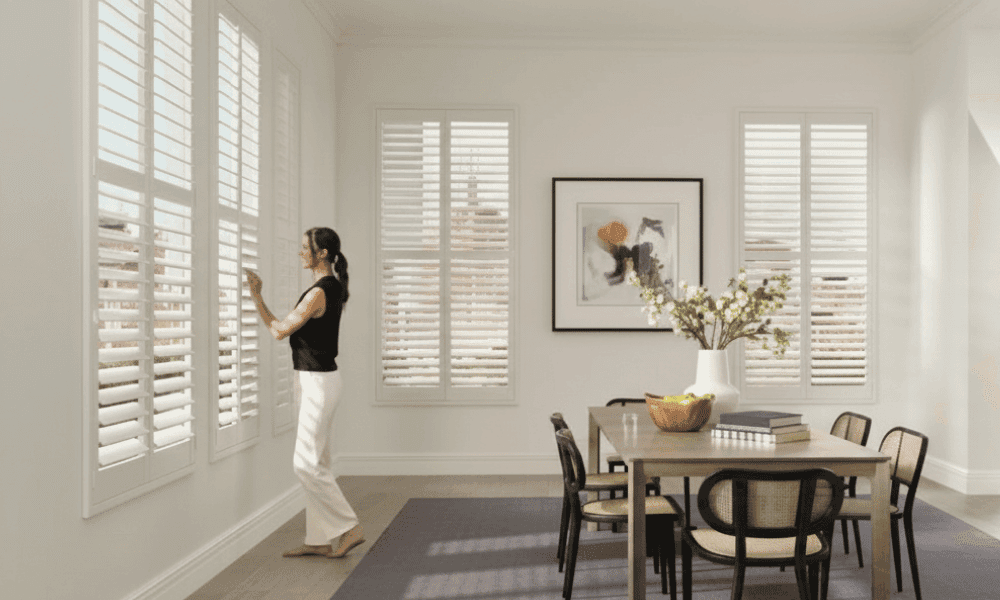
Shutters bring more to a space than people often expect – they handle light, protect privacy, and add a made-for-your-home look that feels permanent.
The challenge is that each style has its own strengths, from flexible tier-on-tier panels to solid options built for blackout.
With so many options, it helps to know what each one does best. We’ll break down the main types of shutters and where they really shine.
Key Notes
Full-height shutters provide clean lines; tier-on-tier offers independent top/bottom control for flexibility.
Café-style covers lower windows only for privacy while maintaining upper light access.
Plantation shutters with wider louvres (76-89mm) balance a modern look with practical light control.
Solid panel shutters deliver near-blackout conditions ideal for bedrooms and media rooms.
Types of Shutters
Full Height Shutters
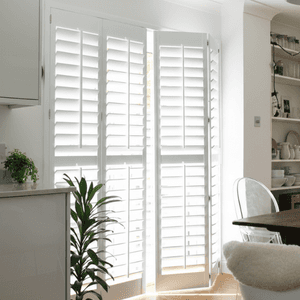
Full height panels cover the entire window from sill to top, often with an optional mid rail or a split in the louvres so the top and bottom can tilt independently.
Why people love them
Clean architectural lines that suit modern and traditional rooms
Strong privacy and glare control for TV rooms and home offices
Simple to operate and easy to clean
Good to know
Less flexible than tier on tier if you want the top open and the bottom closed
Consider a mid rail around eye level for independent louvre control
Ideal materials: painted wood for premium finish, composite for family spaces
Best rooms
Bedrooms, living rooms, home offices, French doors.
Tier on Tier Shutters
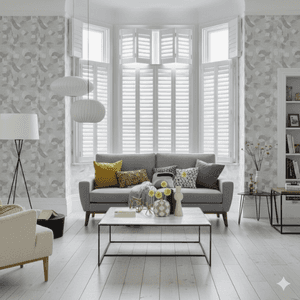
Two sets of panels, top and bottom, that operate independently. You can open the top for daylight while keeping the bottom closed for privacy.
Where they shine
Street-facing rooms that need lower privacy during the day
Bay windows that benefit from flexible control throughout the day
Spaces where glare shifts hour to hour
Watchouts
More visible lines and hardware compared to a single full-height panel
Slightly higher cost due to extra joinery
Tip
Place the split so the top clears any mullions for a neat sightline from the street.
Café Style Shutters
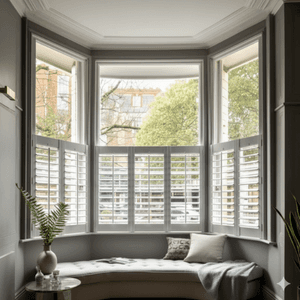
Panels that cover only the lower portion of the window. You get privacy where you need it and light from above.
Why homeowners choose them
Perfect for kitchens and breakfast nooks, plenty of daylight, and no peeking from passersby
Lighter overall look that pairs nicely with drapery if you want extra softness
Limitations
Not suitable if you need full blackout for sleep or media rooms
For night privacy, consider pairing with a soft roman shade above
Solid Panel Shutters
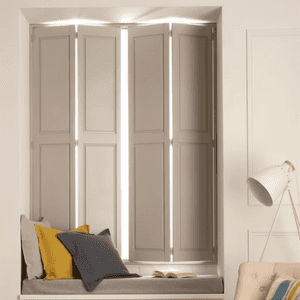
Timber or composite panels with no louvres. They swing open and closed and deliver a traditional, period style look.
Best for
Bedrooms and nurseries that benefit from a darker, quieter feel
Media rooms and home theaters
Period properties where a louvred look feels too modern
Pros
Near blackout when closed, noticeable sound and heat insulation, robust presence.
Cons
Light control is all or nothing, and panels can feel visually heavier on small windows.
Plantation Shutters
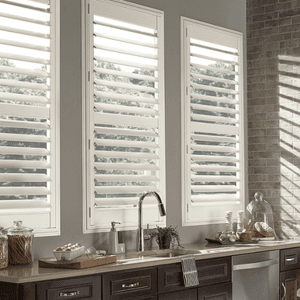
Louvred shutters with wider slats, usually 2 to 4.5 inches. The wider the louvre, the more open and airy the view when tilted.
How to choose louvre size
47 to 64 mm, a more traditional look and tighter privacy
76 to 89 mm, a modern sweet spot with balanced light
100 to 114 mm, minimal lines and maximum view for large panes
Why they work
Excellent control of light and privacy with a timeless style
Easy to keep clean
Tracked Shutters
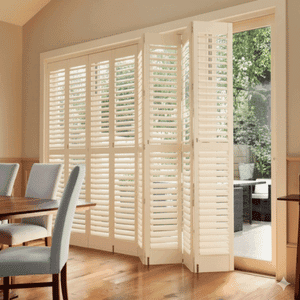
Panels that slide or fold on a track, either bypass or bifold. Ideal for wide spans where hinged panels would be impractical.
Great for
Patio and lanai doors where you want panels to park neatly to one side
Room dividers that can open fully for entertaining
Planning notes
Tracks need clear floor and ceiling lines, so plan around rugs and pendant heights
Choose composite or vinyl for high traffic durability
Shaped Shutters
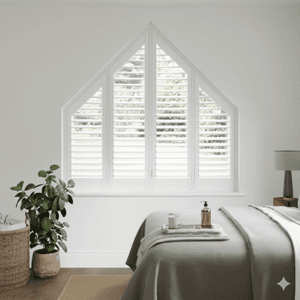
Custom-built panels for arches, circles, triangles, gables, and other architectural shapes. Louvres can follow the curve or sit horizontal depending on design.
Why choose them
Keep the unique window as a feature rather than hiding it
Create continuity when other windows use shutters in the same room
Consider
Extra lead time for templates and manufacturing
Material choice to manage weight on large spans
Bay Window Shutters
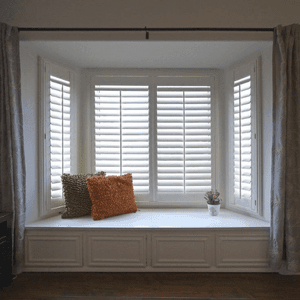
Multi-facet shutter frames are designed to follow the angles of a bay. Depending on control needs, panels can be full height or tier on tier.
Design guidance
Z frames help hide uneven plaster lines and reduce light gaps
Keep rail heights aligned across all facets for a calm, cohesive look
Tier on tier gives flexibility and is popular in living spaces
Waterproof Shutters
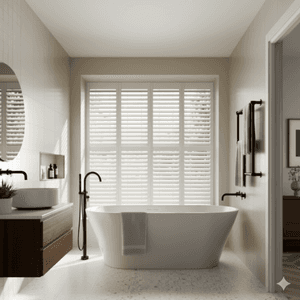
ABS, vinyl, and advanced composites with stainless steel hardware deliver true moisture resistance for bathrooms, utilities, and steamy kitchens.
Benefits
No warping or swelling in humid rooms
Wipe clean in seconds, ideal for busy family spaces
Style tip
Choose a painted white or soft neutral for a wood-like look without the maintenance.
Comparison: Different Types of Shutters
Type | Look | Light Control | Privacy | Best Rooms | Moisture Suitability |
Full height | Clean, continuous coverage | Very good, can split louvres | Very good | Bedrooms, living rooms, offices | Good in most materials |
Tier on tier | Top and bottom operate independently | Excellent | Excellent | Street-facing rooms, bays | Good in most materials |
Café style | Lower half only, continental look | Limited at the top | Good at eye level | Kitchens, dining, sitting rooms | Good in most materials |
Solid panel | No louvres, traditional or shaker | All or nothing | Complete when closed | Bedrooms, media rooms, period homes | Wood or composite only |
Plantation | Wide louvres, timeless | Excellent by tilt | Very good | Most rooms, larger windows | Varies by material |
Tracked | Sliding or bi-fold on tracks | Good by panel position | Good | Patio doors, room dividers | Good in composite or vinyl |
Shaped | Custom for arches, circles, triangles | Good if louvred, total if solid | Good to complete | Feature windows, gables | Depends on material |
Bay window | Multi-facet frame to suit bay | Very good | Very good | Living rooms, period homes | Depends on material |
Waterproof | Painted look without water risk | Very good | Very good | Bathrooms, kitchens, utilities | Excellent |
Materials Guide
Wood
Premium feel and lightweight strength. Popular woods include basswood, poplar, paulownia, and cedar. Unlimited paint or stain options and a beautiful grain.
Pros: timeless, customizable, ideal for large and custom builds.
Cons: sensitive to humidity without the right finish. Avoid in wet rooms.
Composite and MDF
Engineered cores with durable coatings. Stable and budget friendly with a crisp painted look.
Pros: sturdy, consistent finish, less prone to movement.
Cons: heavier than wood, fewer shape options on very large spans.
Vinyl and ABS
Fully waterproof, wipe clean, and family proof.
Pros: perfect for bathrooms and kitchens, low maintenance.
Cons: fewer stains and textures. Choose quality finishes for a premium look.
Aluminum
Used mainly outdoors or for security. Powder-coated for weather resistance.
Pros: strong and durable, excellent for exterior needs.
Cons: cooler to the touch and less insulating than wood-based interiors.
Light, Privacy, and Insulation
Best blackout: Solid panel shutters. Complete coverage for restful bedrooms and media spaces.
Best flexibility: Tier on tier or full height with split louvres. You can tilt lower louvres closed for privacy while keeping the top open for sky light.
Energy performance: Well-fitted shutters create an insulating air pocket at the window. When panels are closed at night and opened for passive solar gain by day, there is a significant heat loss reduction. Wood and quality composites perform best.
Room by Room Recommendations
Bedrooms
Choose full height plantation with split louvres or solid panels if you want near blackout. Stick to calm colors that play well with morning light.
Living Rooms
Tier on tier gives the daytime flexibility most families want. Café style is a nice option if privacy is only needed at eye level.
Kitchens
Café style keeps worktops bright. For a sleeker look, use waterproof full-height with a mid rail for practical control above sinks.
Bathrooms
Waterproof materials are non-negotiable. Consider tier on tier to ventilate upper sections while keeping privacy below.
Home Office
Focus on glare control for screens. Mid rails at eye height help fine-tune light for video calls.
Patio Doors and Sliders
Tracked systems park neatly out of the way. Plan panel stacking to suit furniture and traffic flow.
Customization Options
Louvre size
Affects view, brightness, and style. Larger louvres feel modern and open. Smaller sizes look classic and offer tighter privacy.
Tilt options
Central rods are traditional. Offset rods are subtler. Hidden tilt delivers a clean, contemporary face.
Frame styles
L-frame suits outside mounts or shallow recesses
Z-frame wraps the reveal and hides small imperfections
Box frame helps in bays and when you need a flush perimeter
Color and finish
Painted whites and soft neutrals keep rooms bright. Stains add warmth and show wood grain. Satin finishes are a safe all-rounder.
Blackout upgrades
Consider integrated blackout designs for nurseries or shift work schedules.
Tracked or sliding panels
Scale up control for wide openings without heavy hinges.
How to Choose the Right Shutter?
Start with the function
Is the room about sleep, entertaining, cooking, Zoom calls, or all of the above. That will guide the type quickly.
Check moisture and maintenance
Bathrooms and busy kitchens want waterproof or composite. Formal rooms can lean into painted wood or even stained finishes.
Match the architecture
Larger louvres and hidden tilt feel modern. Smaller louvres and central rods feel classic. Frame style finishes the look.
Example specs
Street-facing living room with a bay: Tier on tier, 76 to 89 mm louvres, hidden tilt, Z frame, painted satin white.
Primary bedroom: Full height with mid rail, 64 to 76 mm louvres, central tilt for a classic look, painted warm white or soft grey.
Family bathroom: Waterproof ABS, full height or café style, stainless hardware, 64 to 76 mm louvres, satin finish.

Ready To Find Your Perfect Shutters?
Get expert guidance, samples, and sizing right at home.
Frequently Asked Questions
Do shutters increase home value?
Yes. Well-fitted shutters are considered a permanent feature, which buyers often see as an upgrade. They add curb appeal and can tip resale value upward compared to temporary treatments.
Can shutters help with noise reduction?
Absolutely. Solid panels and tightly fitted louvred shutters create an extra barrier at the window, softening outside traffic or street noise. They won’t soundproof a room but do make it noticeably quieter.
How long do shutters typically last?
With quality materials and proper care, interior shutters can last 20+ years. Vinyl and composites tend to be nearly maintenance-free, while wood may need refinishing over time.
Are shutters safe for homes with children or pets?
Yes. Unlike blinds, shutters have no cords that pose safety risks. They’re sturdy enough to withstand the occasional bump from pets or kids without damage.
Conclusion
Choosing between the different types of shutters comes down to what each room needs.
Full height works almost anywhere and gives a classic, clean look. Tier on tier is the most flexible, letting you balance privacy and light in busy living spaces or bays. Café style keeps kitchens and dining areas bright while shielding you from the street.
Solid panels block out nearly everything, making them perfect for bedrooms or media rooms. Plantation shutters with wider louvres remain a timeless all-rounder, while tracked shutters make sense for patio doors, and waterproof options solve humidity challenges in kitchens and baths.
If you’re unsure which direction to go, a free in-home consultation is the easiest way forward. You’ll see samples, get tailored advice, and know exactly what will work for your space and lifestyle.